3 Photos
Building a smart policing ecosystem together to lead future enforcement technology
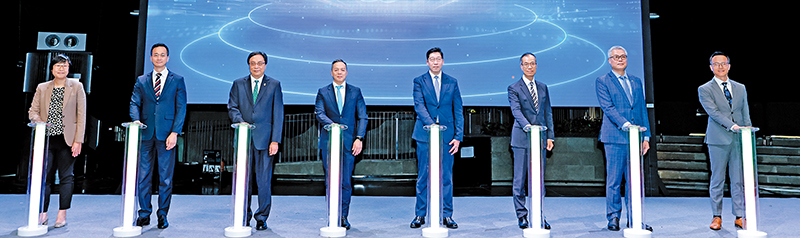
The Smart Policing Joint AI Lab, established collaboratively by the Force and Cyberport, came into operation on May 22. Director of Crime and Security (D C&S) Chan Tung and Chief Executive Officer (CEO) of the Hong Kong Cyberport Management Company Limited (HKCMCL) Dr Cheng Chung-ngam signed a Memorandum of Understanding in the presence of Commissioner
Chow Yat-ming, Deputy Commissioner (Operations) (DCP OPS) Yip Wan-lung, Acting Commissioner for Digital Policy Mr Cheung Yee-wai and Chairman of the HKCMCL Mr Chan Sai-ming. This marks the establishment of a strategic partnership aimed at strengthening the development of Hong Kong’s cybersecurity ecosystem and promoting innovative advancements in smart policing.
Many major multinational corporations and critical infrastructure organisations have deeply integrated artificial intelligence (AI) into their daily operations, significantly improving workflow, service quality and risk response capabilities. The Force is also moving with the times by promoting digital transformation to cope with the rapidly changing environment.
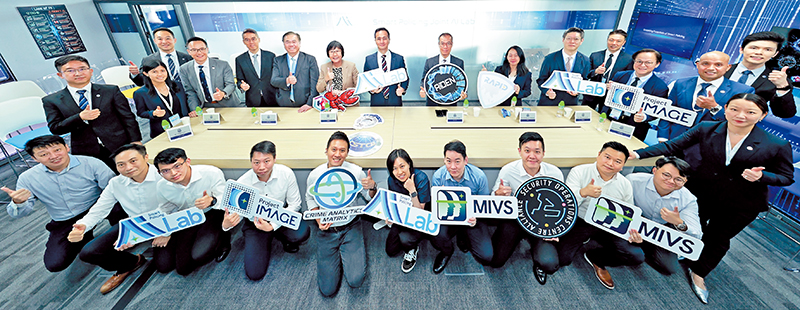
Last year, the Cyber Security and Technology Crime Bureau (CSTCB) established the Artificial Intelligence Unit, dedicated to systematically researching and promoting the application of AI technology in policing practices. The launch of the laboratory represents an important milestone. By integrating the Force’s practical experience, Cyberport’s innovation and technology ecosystem resources, and cutting-edge technology from local technology companies, the laboratory connects a series of processes, namely concept validation, laboratory testing, frontline deployment and routine operation, to address the increasingly complex challenges of digital policing.
Empowering policing through technology Securing society through data
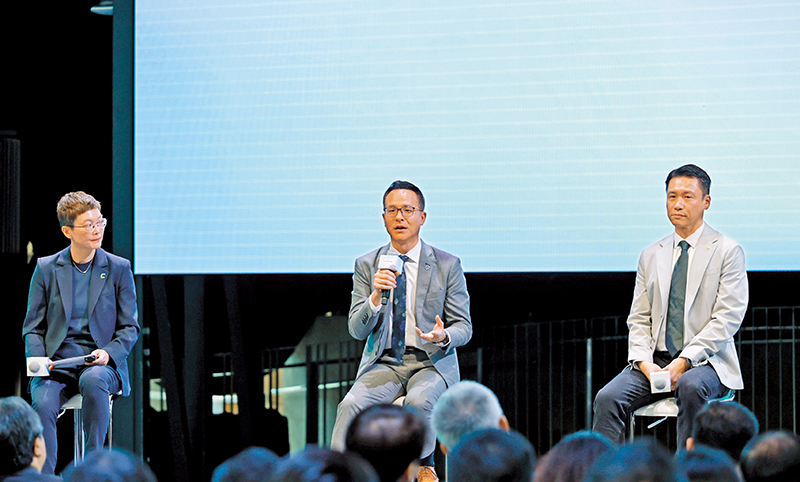
The Force aspires to build an open, collaborative and continuously evolving smart policing ecosystem. This initiative fosters the development of innovative policing technology and deepens the application of technology in crime prevention, enforcement support and public services. It also promotes an integrated collaborative innovation mechanism involving the Government, industry, academia, research institutes and investors.
In response to the internal needs of the Force, the laboratory is developing several bespoke technological solutions. For applications related to public services and multi-stakeholder collaboration, the laboratory is focusing on developing deepfake detection systems to accurately verify the identities of account holders and consolidating the intelligence gathered by the Force to enhance risk prediction.
To realise these objectives, the laboratory has connected to Hong Kong’s first AI Supercomputing Centre, gaining access to enterprise-grade graphics processing unit computing resources. In collaboration with technology companies, the laboratory is developing AI systems specifically tailored for policing, with a view to improving intelligence processing, evidence analysis accuracy and inter-departmental collaboration capabilities.
People are the foundation From laboratory idea to frontline application
The Force aims to cultivate a team of digital policing elites equipped with both enforcement intuition and technical expertise through technical exchanges with leading technology companies, participation in frontier AI projects, and the development of practical policing skills combined with AI technology application capabilities.