


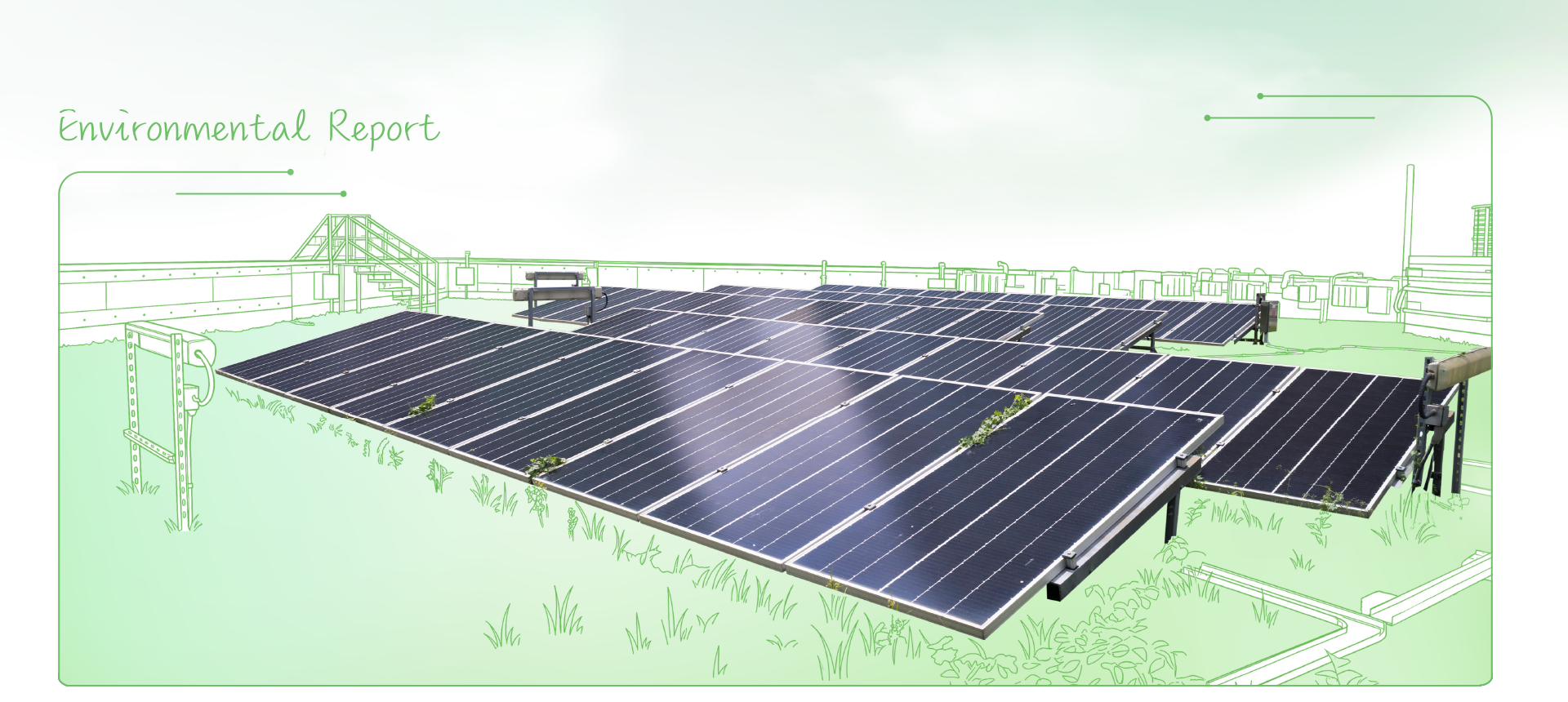
The Force is committed to environmental protection and sustainable development. All its operations and services comply with green legislation, environmental-friendly codes of practice and good environmental management measures. All Force members endeavour to minimise waste and prevent pollution. The Steering Committee on Green Management established by the Force provides direction and monitors the implementation of energy-saving and environmental management initiatives.
Environmental Performance in 2025
Green Buildings
The Force has adopted different renewable energy technologies across its premises, including the installation of solar photovoltaic (PV) panels on rooftops of some police stations and buildings, as well as in open-air car parks such as the Kowloon East (KE) Regional Headquarters Complex, Hong Kong Auxiliary Police Force Headquarters, Police Officers’ Club (POC), and Fan Garden Junior Police Officers Married Quarters. During the year, PV panels were also installed at the base of the Explosive Ordnance Disposal Bureau at Mount Butler, Airport Police Station, and Tin Shui Wai Police Station. The Force will continue to expand solar PV system installation plans to other premises.
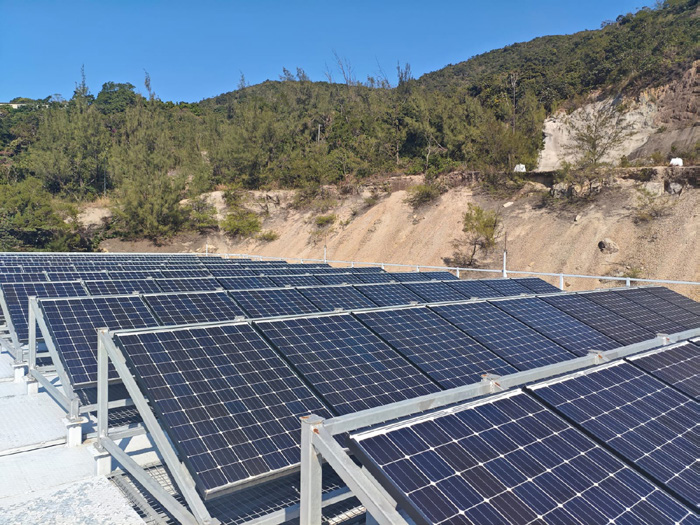
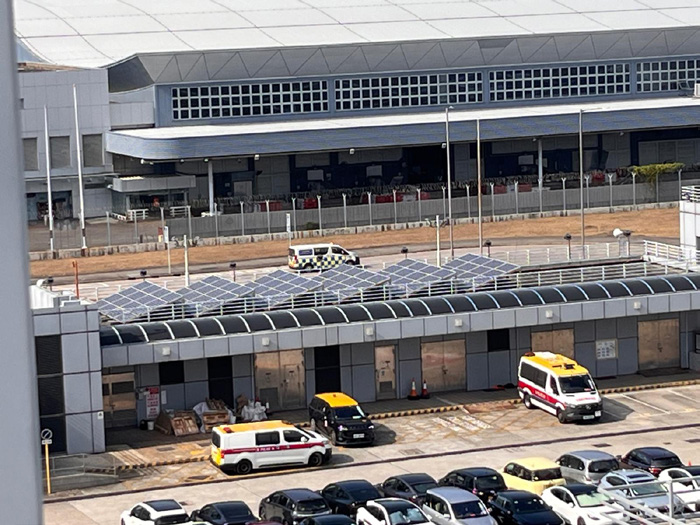
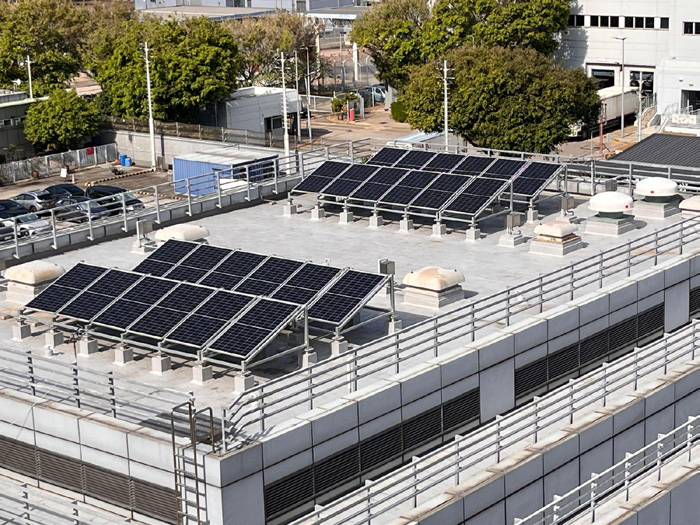
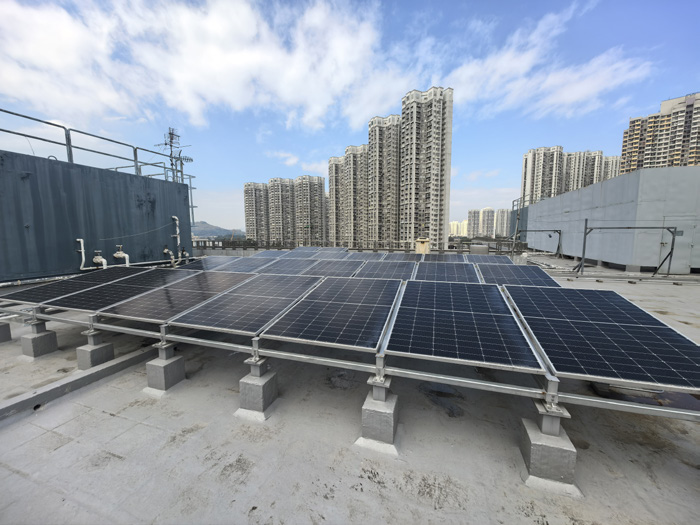
The newly installed solar PV panels at the base of the Explosive Ordnance Disposal Bureau, Airport Police Station and Tin Shui Wai Police Station.
Solar water heating systems are in use in the KE Regional Headquarters Complex, Tsim Sha Tsui Police Station, and Yau Ma Tei Police Station to preheat water to conserve energy.
Appropriate waste reduction facilities have also been introduced in Force premises. A food composter installed in the canteen of the newly built Hong Kong Police College Integrated Training Centre (Kong Nga Po) converts food waste into powdered fertiliser through a natural biodegradation process. In addition, 35 water dispensers with filtering and sterilisation functions and connected to the water mains have been installed in the offices, classrooms and training areas of the Training Centre to reduce the consumption of bottled water.
The Force has constantly incorporated green features into its premises to reduce energy usage. Examples include upgrading lighting systems to light-emitting diodes (LEDs), and replacing ageing air-conditioning chillers with high-efficiency models. In addition, insulation materials have been applied to building rooftops to lower surface temperature and hence reduce energy consumption by air-conditioning systems.
Green Transport
The Force is progressively replacing conventional vehicles with electric ones, while steadily expanding the number and coverage of charging facilities at its premises. These include the installation of medium and quick electric vehicle chargers to meet the growing demand for charging. Charging facilities of various types are installed at the Police Headquarters Complex, KE Regional Headquarters Complex, Chai Wan Police Married Quarters, Aberdeen Police Station, Police Sports and Recreation Club, and POC.
Moreover, the Force has implemented a number of measures to reduce greenhouse gas emissions from the Marine Police’s fleet, including the use of biodegradable B5 diesel and the installation of emissions management systems in new vessels. Ultraviolet (UV) heat-insulating window films are also applied to police launches to reduce energy consumption by the air-conditioning systems.
Digital Policing
To align with Hong Kong’s Smart City vision and carbon neutrality targets, the Force has implemented a number of digital initiatives that enhance service efficiency while reducing its environmental footprint.
For example, the eTraffic Ticket Platform digitalises the data collection procedure and issues Fixed Penalty Notices (FPNs) for traffic contraventions via SMS or email. The mobile application and thematic portal of the Electronic Traffic Accident Record (eTA) system enable frontline officers to record and process traffic accident reports electronically at the scene.
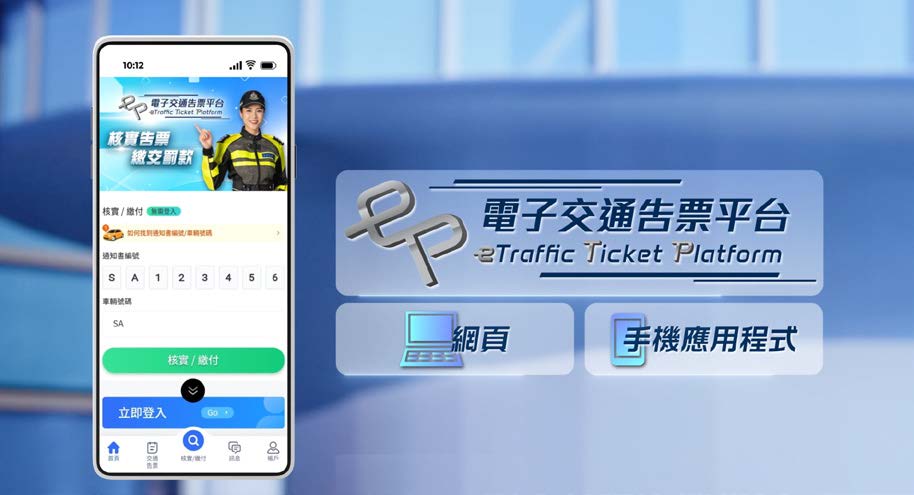
Members of the public can view and verify the FPNs and settle their fines online through the eTraffic Ticket Platform.
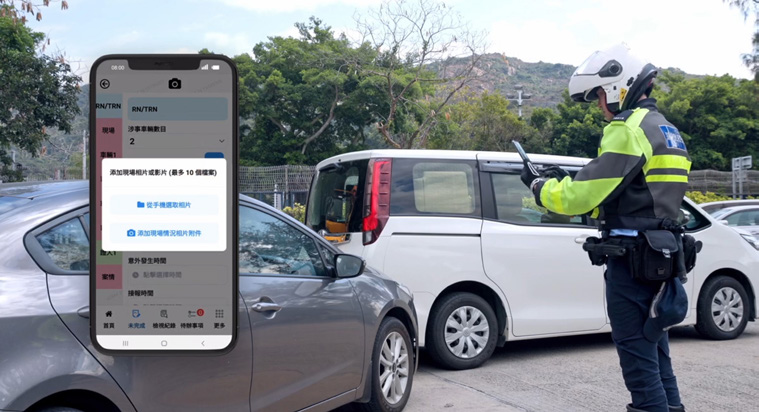
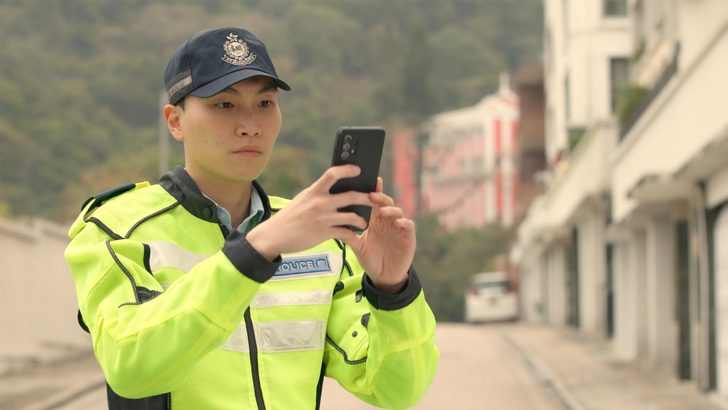

The eTA system replaces the paper-based handling procedure, and streamlines the incident recording and investigation process.
Housekeeping Measures
The Force encourages its formations to implement suitable green measures to reduce energy consumption. For lighting systems, these measures include removing excessive lights to reduce electricity use, installing motion sensors and automatic lighting systems to switch off unused lights, adjusting the operating hours of outdoor lighting to maximise the use of daylight, and switching off external lights for decorative, promotional, and advertising purposes at or before 10pm until 7am the following day.
Other energy-saving measures include utilising independent air-conditioning control systems for more efficient regulation of indoor temperature, setting timers to switch off office equipment at scheduled times, and adjusting gas water heaters to lower flame levels.
In addition, the Force has shortened the operating hours of lifts and escalators during off-peak periods, and has utilised rooftop gardens and UV protection heat-insulating window films to lower room temperature.
Other housekeeping measures include displaying slogans to encourage staff to use the stairs instead of lifts, as well as putting up notices and stickers near light switches, electrical appliances, pantries, and toilets to remind officers to save energy, conserve water, and use fewer paper towels.
Water Conservation
For water conservation, the Force encourages its formations to deploy smaller showerheads, equip taps with flow controllers and automatic sensors, and adopt dual flush toilet cisterns. The Force also encourages the formations to deploy sensoroperated flush valves for urinals and to use rainwater harvesting systems for irrigation.
Waste Reduction and Recycling
The Force implements paper recycling programmes and encourages its formations to adopt similar recycling arrangements for food waste, aluminium cans, plastic bottles, glass bottles, toner cartridges, used cooking oil, fluorescent lamps, rechargeable batteries and electrical appliances. Recycling bins for waste paper, plastics, metals and glass bottles are provided at Force premises.
Both staff canteens and recreational venues comply with the regulations on disposable plastic and observe the enhanced Plastic Shopping Bag Charging Scheme. Disposable plastic tableware and related plastic products are no longer provided. Posters are also displayed in common areas to encourage staff to use reusable tableware and bring their own shopping bags.
The Force progressively deploys zero-waste digital signage boards, LED video walls or other electronic means to replace traditional notice boards for dissemination of information. In addition, efforts are widely made to advance the digitalisation of work processes and adoption of paperless meetings. Members of the public are also encouraged to view the Police Public Page at www.police.gov.hk and the Force’s mobile applications and social media platforms for information about the Force. In 2024-25, the Force consumed 250,215 reams of paper.
The Force also regularly organises staff activities to provide a platform for exchanging used objects, such as books and electrical appliances.
Police barges are fitted with high-standard biochemical domestic sewage treatment facilities to minimise wastewater discharge.
Food Wise Campaign
To support the Environmental Protection Department’s Food Wise Charter, canteen operators are advised to review their food supply quantities and offer different portion options. Staff members are also encouraged to order meals thoughtfully and take away leftovers so as to reduce food waste.
Indoor Air Quality (IAQ)
The Force has participated in the IAQ Certification Scheme and has achieved the Excellent/Good Class IAQ certification.
Green Procurement
In support of the Government’s green procurement policy, the Force purchases various green products, including uniforms, office equipment and stationery. Fire extinguishers equipped in new police vessels also comply with the specifications set out in the Government’s Reference List of Green Products.
Carbon Management
During the year, carbon audits of 69 police buildings were conducted. The results showed that the average greenhouse gas emissions from these buildings contained 0.11 tonnes of carbon dioxide per square metre of floor area, representing a 8.2% decrease as compared to the year 2024.
Energy Performance
The Government has set a Green Energy Target with the aim of improving energy performance under comparable operating conditions in 2018-19 as the baseline. The target applies to government buildings and its infrastructural facilities. It aims to reduce electricity consumption and the use of other energy sources, such as town gas and liquefied petroleum gas, while also considering the contribution of renewable energy to carbon reduction.
As at 2024-25, the Force improved its energy performance by 4.3%, with 4.2% attributable to energy savings and 0.1% to the use of renewable energy.
Environmental Awareness of Staff
Green management concepts are incorporated into staff development programmes and activities, and are reinforced during briefings, meetings and training sessions. Green Wardens are assigned to promote environmental awareness among Force members and regularly disseminate green tips for offices.
Engagement with Stakeholders
The Force co-organised the Used Clothing Collection Campaign with Christian Action and participated in Earth Hour 2025, a lights-off event organised by the World Wide Fund for Nature. During the year, the Force received more than 141 tonnes of clothing and other used items from 27 collection points.
The Way Forward
The Force fully supports the Government’s environmental protection policies and initiatives to combat climate change. It will continue to uphold the 3-R principles of ‘Reduce, Reuse, and Recycle’ in its daily operations, adopt energy-efficient measures, closely monitor the effectiveness of energy-saving measures, and explore ways of expanding and promoting green management principles.

Please also refer to the HKPF’s Environmental, Social and Governance Report.